Building the UX foundation for a scalable HR Design System across multiple enterprise platforms.
Category:
Enterprise UX
Role:
Senior UX Designer
Duration:
5 month
Client: Novo Nordisk

My Role
I independently established the UX foundation for Novo Nordisk's new HR Design System—from discovery and stakeholder interviews to defining UX principles, information architecture, component strategy and implementation guidelines.
Research revealed that consistency depended on shared principles, governance and ways of working rather than reusable UI components. This shifted the project from building a component library to establishing the foundation for a scalable HR Design System.
The Challenge
HR leadership wanted to create a more consistent user experience across the department's internal HR platforms and initiated a Design System initiative to support this goal.
UX designers frequently moved between projects.
Figma files were structured differently.
Knowledge transfer was difficult.
Existing global Design System couldn't support HR platforms.
Platform-specific technical constraints.
HR leadership wanted greater consistency across platforms.
Research & Discovery
To understand the real challenges, I conducted interviews, workshops and collaborative sessions with the HR UX team. Rather than validating assumptions, the goal was to uncover the root causes before defining the solution.

Key Research Findings
The project initially focused on creating reusable UI components. However, research revealed that the biggest challenge wasn't missing components, it was inconsistent ways of working across HR platforms. This shifted the project from building a component library to establishing the foundation for a scalable Design System.


Design Solution
Based on the research, I established the UX foundation for a scalable HR Design System. Rather than focusing on reusable UI components, the solution introduced shared principles, governance, platform guidelines and standardized ways of working across HR platforms.
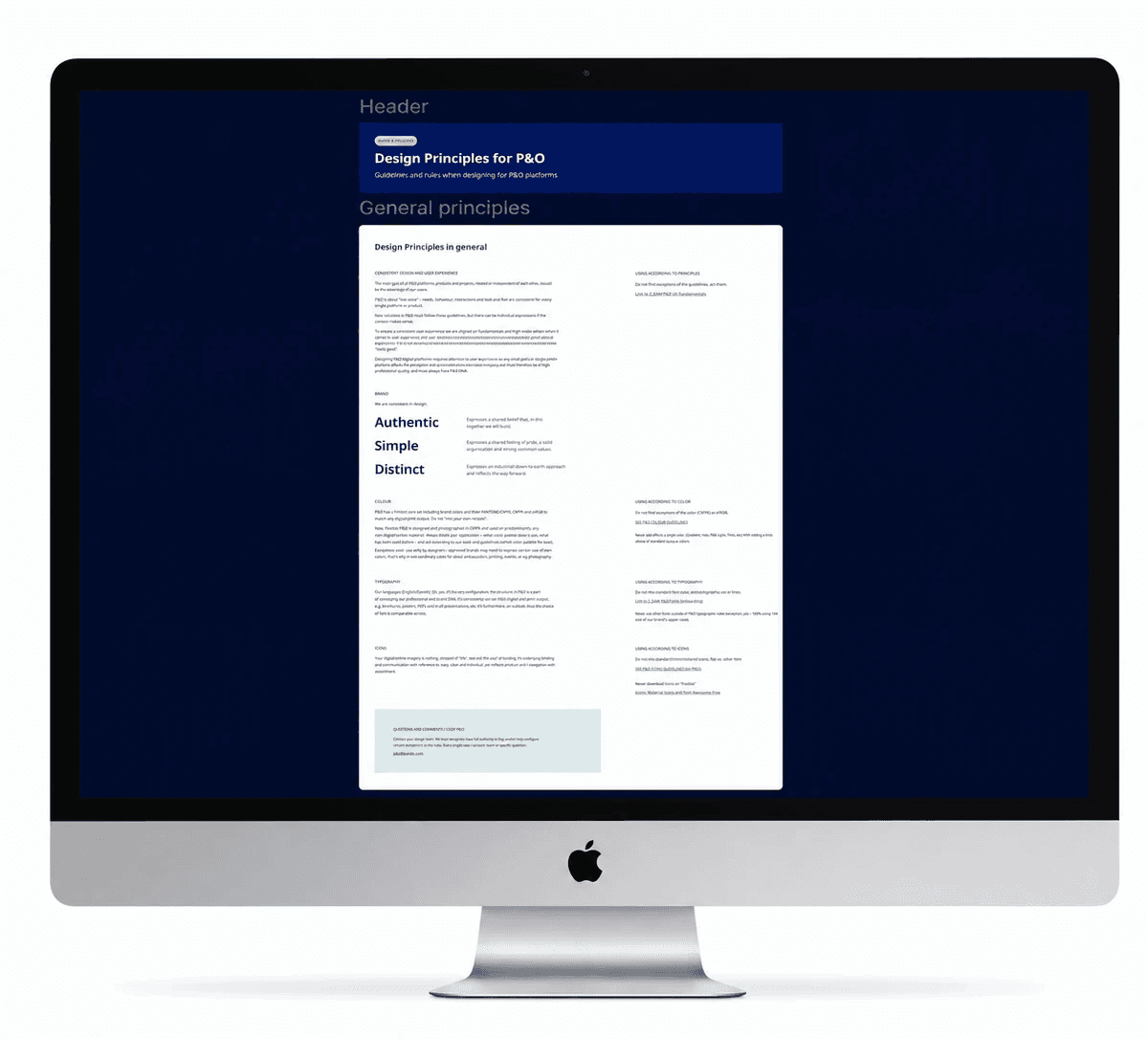
Shared Design Principles
Established common UX principles and
references that all designers could align
around regardless of platform.
Enabled consistent UX decisions
across HR platforms.

Shared Figma Structure
Standardized project structure made handovers
significantly easier and reduced onboarding
when designers moved between projects.
Made onboarding, collaboration and
project handovers faster and
more consistent.
Platform-specific Guidelines
Since HR worked across several
technologies, each platform received
dedicated guidance while maintaining
a consistent UX approach.
Enabled designers to apply
shared UX principles despite
technical differences.


Styling & Brand
Instead of redefining Novo Nordisk's
visual identity, I translated existing brand
guidelines into practical design resources
that HR UX designers could consistently
apply across different platforms.
Made it easier to apply
Novo Nordisk's visual identity
consistently across HR platforms.
Foundation for Future Components
Although the project began as a Design
System initiative, research showed that
reusable components should come after
establishing shared principles and
governance. The project therefore
laid the foundation for future
component development.
Established the foundation for
scalable component development.

Key Learnings
Research changes direction – Validate the problem before designing the solution.
The project began as a Design System initiative, but user research revealed that the team's biggest need was a shared foundation for collaboration rather than additional UI components.
Design systems are about people – Consistency is created through shared practices as much as shared components.
Governance, documentation, and standardized file structures proved just as important as visual consistency.
Structure enables collaboration – Good file organization is a UX deliverable.
Standardizing Figma structures made it easier for designers to hand over projects, onboard colleagues, and maintain long-term quality across teams.
Looking ahead – This foundation was designed to scale.
With shared principles, governance, and documentation in place, the organization had a much stronger basis for building a reusable component library in the future.
Final Reflection
This project reinforced one of my core beliefs as a UX designer: the best solutions rarely come from validating assumptions—they come from understanding people. By challenging the original brief through research, I helped redefine the project from building a Design System to creating the foundation that a successful Design System depends on.
• Established a shared UX foundation.
• Standardized ways of working.
• Improved onboarding and collaboration.
• Created the foundation for future component development.